inquiry
Leave Your Message
0%

Setting up a Gnss Base Station is pretty much the foundation for getting those super accurate position readings, whether you're into surveying, farming, or any other mapping work. I recently heard Dr. Michael Stevens from PrecisionMapping Inc. mention that 'the accuracy of your positioning really depends on how good your GNSS Base Station is.' Makes sense, right? Proper setup and careful configuration are shoulder-taps for success.

Having a solid GNSS Base Station can really make your data collection sharper and more reliable. But honestly, a lot of folks underestimate just how tricky it can be to get everything right. Common slip-ups? Poor antenna placement, not enough attention to power supply, stuff like that. These small mistakes can throw off your measurements and end up wasting a bunch of time and resources.

You gotta take these challenges seriously and think things through. It’s important to know your environment—things like trees, buildings, or even moving objects can mess with the signals. Setting up a GNSS Base Station isn’t just a one-and-done deal; it’s an ongoing process of checking, adjusting, and making sure everything’s working smoothly. The main aim? To keep your positioning data reliable and consistent, no matter the project at hand.
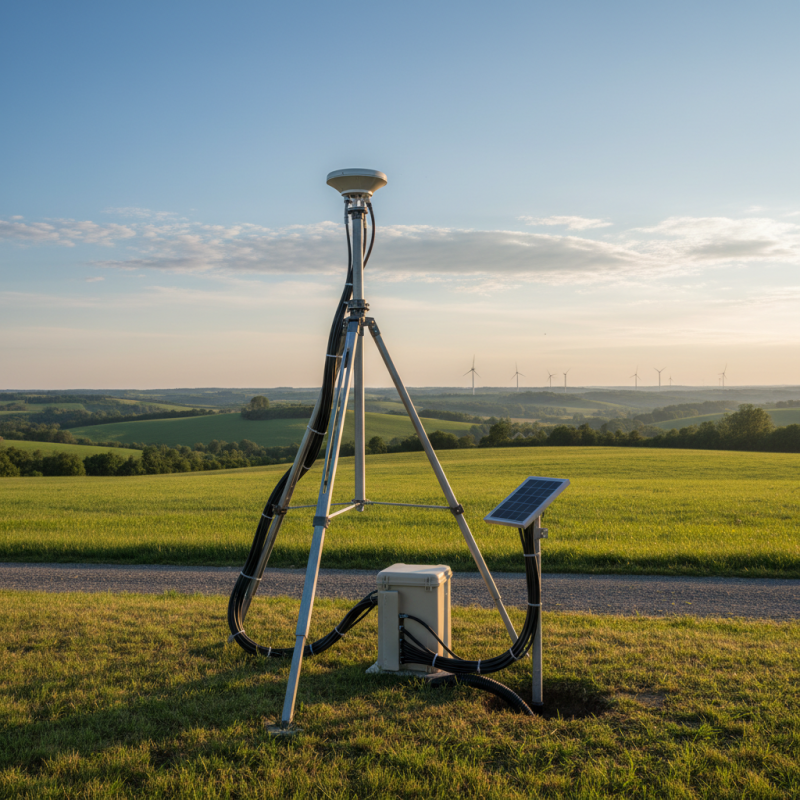
How to Set Up a Gnss Base Station for Accurate Positioning?

Overview of GNSS and Its Applications in Accurate Positioning

Global Navigation Satellite System (GNSS) technology has transformed various industries. It plays a critical role in surveying, agriculture, and transportation. Accurate positioning is essential for tasks like mapping and route planning. GNSS provides this accuracy, with studies showing that positioning can reach within a few centimeters. This level of precision is vital for applications in construction and autonomous vehicles.

Setting up an Rtk Base Station Gnss can enhance accuracy significantly. Such systems can improve location data by reducing errors caused by atmospheric interference. According to recent data, RTK systems can provide real-time corrections with centimeter-level accuracy. This has made them invaluable for engineers and surveyors. Yet, achieving such accuracy is not always straightforward. Environmental factors can affect signal quality, and careful site selection is needed.

Users must also consider the costs associated with GNSS systems. While the benefits can be substantial, the initial investment can be high. Regular calibration and maintenance are crucial to maintaining accuracy. If not managed properly, performance can degrade over time. The reflective surfaces and obstructions can lead to multipath errors, complicating matters further.

Analysis of GNSS Accuracy Over Different Satellite Configurations

Understanding GNSS Base Stations and Their Components

Understanding GNSS base stations is crucial for accurate positioning. These stations are vital components in the Global Navigation Satellite System ecosystem. They typically consist of a receiver, antenna, and a computing unit. The receiver captures satellite signals, while the antenna enhances signal clarity. However, setting them up is not a one-size-fits-all process.

One common mistake is overlooking the station's location. It should be free from obstructions like tall buildings or trees. Signal interference can lead to errors in positioning. The computing unit processes the received data, but it requires proper calibration. Users often forget to check the firmware and software updates, which are essential for optimal performance.

Environmental factors can also impact accuracy. For instance, weather changes may affect signal quality. Users sometimes underestimate this aspect. A base station may seem to work fine indoors, but outdoor settings are more ideal. In conclusion, understanding these components and addressing potential issues is key to successful GNSS base station setup.

Selecting an Ideal Location for Your GNSS Base Station

How to Set Up a Gnss Base Station for Accurate Positioning?

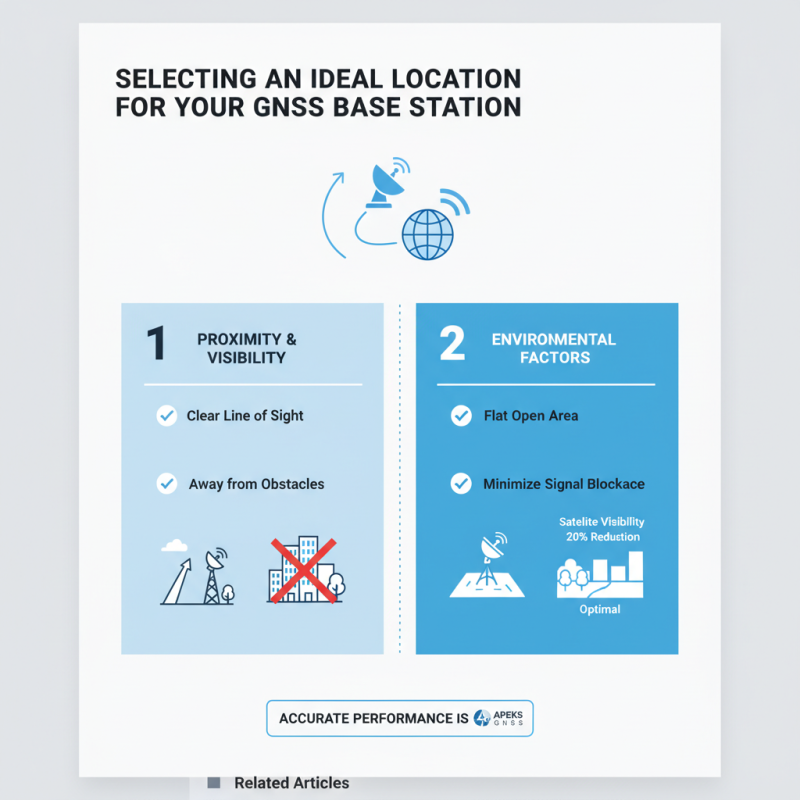
When selecting a location for your GNSS base station, proximity and visibility are key. A clear line of sight to the sky is crucial for accurate Gnss Rtk Base Station performance. According to a report by the International GNSS Service, environmental factors can impact satellite visibility by up to 20%. This means that positioning the station in a flat area, away from tall buildings or trees, is ideal.

Accessibility to the site is another critical factor. Stations need regular maintenance and sometimes quick access for repairs. Remote locations may offer better satellite visibility but can complicate service. Weather conditions also play a role. Extreme temperatures can affect equipment functioning. Studies show that equipment can malfunction in temperatures exceeding 40°C.

Additionally, the site should have minimal electromagnetic interference. High-voltage lines or radio towers can disrupt signals, affecting data quality. Even minor obstacles can cause reflection or multipath errors. Understanding these factors is essential for setting up a reliable Gnss Rtk Base station. Each site will have its challenges, requiring careful consideration and planning.

Required Equipment and Tools for Setting Up a GNSS Base Station

Setting up a GNSS base station requires specific equipment and tools to ensure accurate positioning. Key components include a high-precision GNSS receiver, antenna, and a stable power supply. A survey-grade antenna is essential for minimizing multipath errors. According to recent industry studies, using antennas with a ground plane can reduce positioning error by up to 50%.

Connections between these devices need reliable cables and connectors. Coaxial cables should be of high quality to limit signal loss. Additionally, a controller or datalogger is necessary for data collection and management. These devices often come with software to analyze collected data. Research indicates that improper setup can lead to up to 10% error in positioning results.

In terms of environmental considerations, selecting a clear location for the base station is crucial. Obstructions like trees or buildings can interfere with satellite signals. Review reports show that nearly 30% of GNSS inaccuracies are attributed to environmental factors. It's important to regularly check the setup for adjustments. Simple oversights can lead to significant errors in data collection.

Step-by-Step Installation Process for GNSS Base Station

Setting up a GNSS base station can be challenging yet rewarding. Accurate positioning relies heavily on precise installations. Begin by selecting a suitable location. Ideally, choose an open area with minimal obstructions. This ensures maximum satellite visibility. A Small Gnss Base Station For Rtk Applications can perform exceptionally well when placed properly. Avoid locations with tall buildings or dense foliage. These can block signals and affect accuracy.

Next, install the mounting system securely. Use a stable platform to resist environmental factors. Wind and vibrations can disrupt measurements. The height of the antenna is crucial. A higher position can improve visibility to satellites. However, make sure it is within the specifications given in technical reports. In environments where multipath errors are prevalent, a strong setup can mitigate inaccuracies. According to recent studies, positioning errors can exceed several centimeters if the setup is poor.

Lastly, ensure your equipment is configured correctly. Establish clear communication links between the base station and the rover units. Regularly check for signal integrity. Some operators overlook routine maintenance. This can lead to accumulated errors over time. Reports indicate that a well-maintained base station improves data reliability by up to 30%. A defined protocol for these checks is essential for long-term accuracy.

How to Set Up a Gnss Base Station for Accurate Positioning? - Step-by-Step Installation Process for GNSS Base Station

Step Task Tools Required Duration Notes
1 Select Site Location GPS device, compass 1 hour Ensure a clear view of the sky
2 Prepare the Site Shovels, leveling tools 2 hours Level the ground
3 Install the Antenna Mounting bracket, screws 1 hour Securely attach the antenna
4 Connect the Receiver Cables, connectors 30 minutes Ensure waterproofing
5 Configure the GNSS Settings Computer, software 1 hour Follow manufacturer guidelines
6 Test the System Testing equipment 1 hour Check for accurate readings

Configuring GNSS Base Station for Optimal Performance

Setting up a GNSS base station requires careful consideration to ensure optimal performance. To start, choose a location with minimal interference. Open areas with a clear sky view enhance satellite signals. Avoid sites near tall buildings or dense vegetation. These obstacles can distort signals and affect accuracy.

Tips: Regularly check the surrounding environment for any changes. New constructions can impact signal quality.

Position your Base Station For Gnss at a stable foundation. Ground movement can lead to inaccurate readings. Consider concrete pads or other stable surfaces for setup.

Tips: Monitor the station after installation. Look for any discrepancies. Small errors may compound over time.

Lastly, calibrate your station frequently. Over time, hardware may drift. Routine checks ensure that you maintain accuracy. Engaging with local GNSS communities can provide insights. They often share valuable troubleshooting techniques and updates on signal changes.

Testing and Maintaining Your GNSS Base Station for Accuracy

How to Set Up a Gnss Base Station for Accurate Positioning?

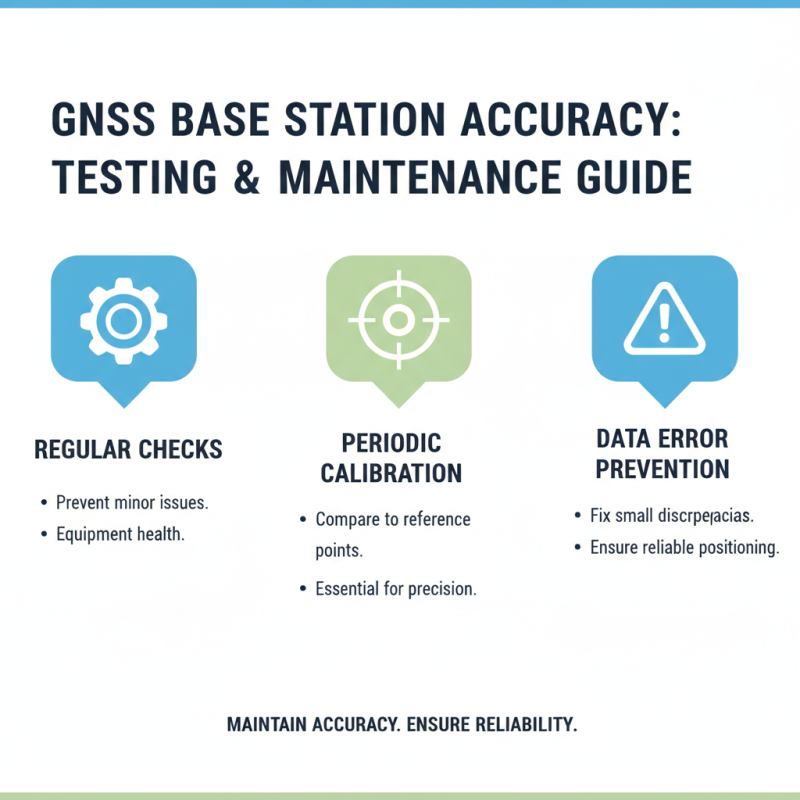
Testing and maintaining a GNSS base station is crucial for ensuring accurate positioning. Regular checks can prevent minor issues from becoming major problems. Periodic calibration of the equipment is essential. This involves comparing the station's measurements to known reference points. Small discrepancies in readings can lead to significant errors in data.

Environmental factors can affect performance, too. Heavy rain or snow can obstruct signals. Make it a habit to inspect the antenna and surrounding area. Look for obstructions, such as trees or buildings. Clearing these obstacles can enhance signal quality. Don't overlook the impact of temperature fluctuations, either. Ensure that the equipment can handle extreme changes without performance degradation.

Documentation is vital for tracking performance over time. Create a maintenance log to record all checks and adjustments. This will help you identify patterns or recurring issues. Regular training for personnel managing the station is also important. Skills can fade without practice, impacting overall efficiency. Reflect on any operational challenges you encounter. Each setback can teach valuable lessons for future maintenance efforts.

Maximizing Surveying Precision: The Benefits of the New Leica GPR121 Equivalent Total Station Monitor Prism Assembly

The introduction of advanced total station monitor prism assemblies has significantly enhanced the precision of surveying tasks. The latest innovation features a precision circular prism, which is equipped with an advanced anti-reflex coating, ensuring optimal performance even in challenging lighting conditions. This meticulous design allows for outstanding accuracy, with a centering precision of just 1.0 mm—notably beneficial for high-stakes construction and engineering projects.

Moreover, the monitor prism assembly boasts an impressive operational range of up to 3,500 meters (11,500 feet), making it a versatile tool for various surveying applications. The removable GPR121 target plate provides added flexibility, allowing for easy transport and setup. This innovative design not only maximizes efficiency on the job site but also ensures that surveyors can achieve unrivaled accuracy in their measurements, leading to better project outcomes. With these advancements, professionals can confidently tackle even the most demanding surveying requirements.

FAQS

: What is GNSS technology?

: GNSS technology provides precise positioning for various industries. It is vital for surveying, agriculture, and transportation.

How accurate can GNSS positioning be?

Studies show GNSS can achieve accuracy within a few centimeters. This precision is crucial for construction and autonomous vehicles.

What enhances the accuracy of GNSS systems?

Setting up an RTK base station can significantly enhance GNSS accuracy. It reduces errors from atmospheric interference.

What should users consider when setting up GNSS systems?

Users must consider costs and environmental impacts. Signal quality can be affected by obstructions or weather changes.

What are the components of a GNSS base station?

GNSS base stations consist of a receiver, antenna, and computing unit. Each component plays a role in accurate positioning.

Why is station location important?

A base station should be free from obstructions. Tall buildings and trees can interfere with satellite signals and reduce accuracy.

How can multipath errors be mitigated?

A strong installation setup can help mitigate multipath errors. Proper mounting and antenna height are essential for reducing inaccuracies.

What maintenance is required for GNSS systems?

Regular calibration and maintenance are essential. Neglecting this can lead to degraded performance and accumulated errors over time.

How does weather affect GNSS accuracy?

Weather changes can impact signal quality. Users often underestimate this factor, affecting the overall effectiveness of the system.

What can happen if routine checks are overlooked?

Skipping routine checks can lead to significant accuracy issues. A well-maintained system improves reliability and data quality.

Conclusion

Setting up a GNSS base station is crucial for achieving precise positioning, widely used in applications such as surveying, navigation, and geospatial data collection. To establish an effective GNSS base station, one must first understand its components and functions, ensuring that the chosen location offers an unobstructed view of the sky to receive satellite signals.

The setup process involves selecting the right equipment and tools to facilitate installation, followed by a systematic step-by-step process to ensure proper configuration for optimal performance. After installation, routine testing and maintenance are essential to verify accuracy and reliability, allowing for consistent data output in various applications. By focusing on these key elements, users can effectively establish a GNSS base station that meets their positioning needs.

Samantha

Samantha

Samantha is a dedicated marketing professional at Shanghai Apekstool (APEKS), a leading provider of innovative geospatial surveying and mapping products based in Shanghai, China. With a deep understanding of the industry, she excels in promoting the company's core offerings, which include......
Previous Top 10 RTK Col Antenna Manufacturers from China at the 137th Canton Fair